



Slots, Tables, Live: How Each Category Feels Online

Matt Bourie
Casino Expert


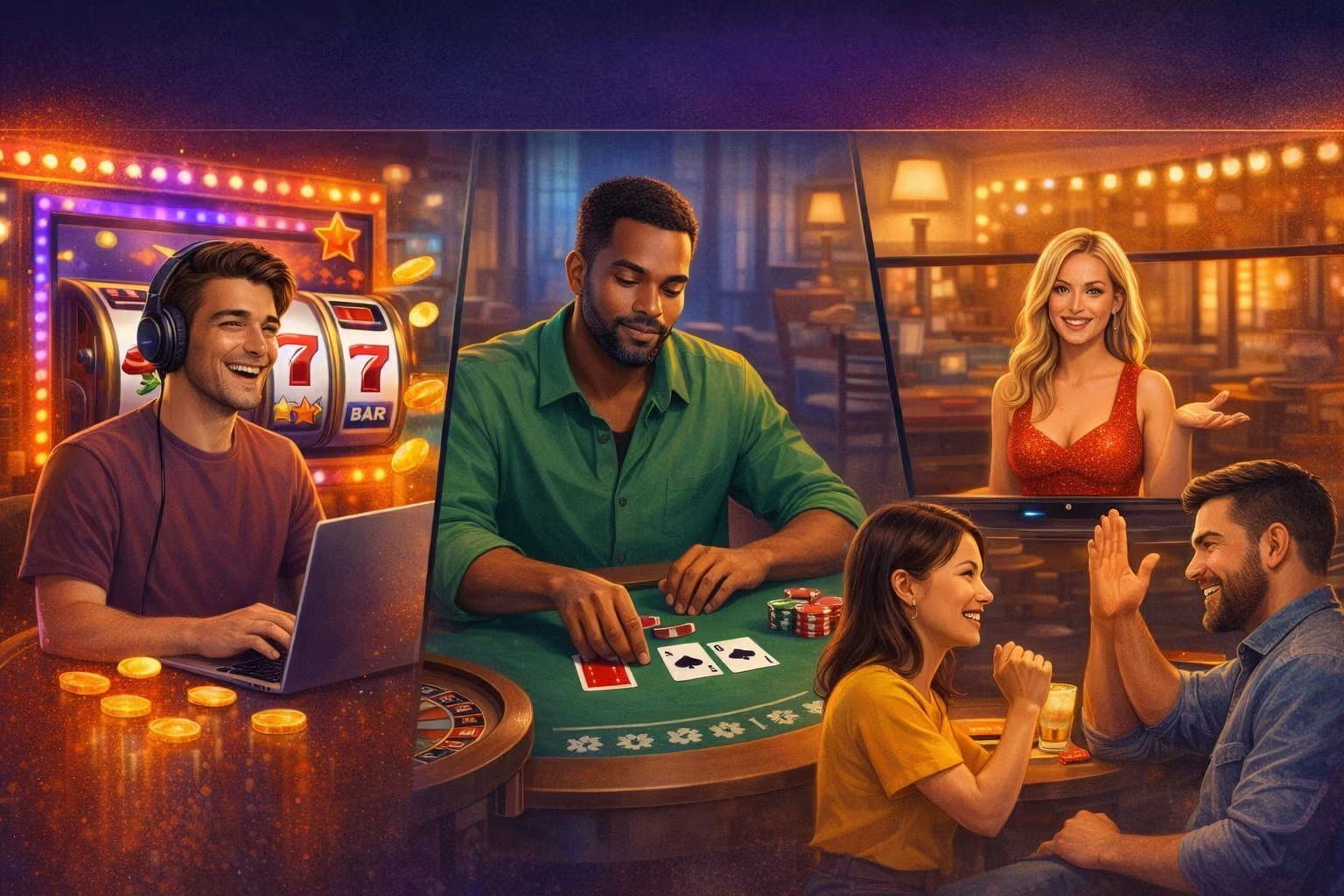
When I first landed on Jackpot City, what immediately stood out to me was how deliberately the experience is segmented. Having spent more than 12 years evaluating digital casino interfaces and user journeys, I tend to notice more than just what’s obvious. How the site guides attention, controls pace, and shapes engagement is essential to me. At Jackpot City, slots, table games, and live casino games all feel like distinct environments rather than variations of the same thing.
The Rhythm and Visual Identity of Slots
Slots are where the interface feels most visually expressive. Most slots initially tried to mimic land-based machines, and naturally, they were simple and lacked elaborate visual cues. This changed over the years as player engagement grew. Developers started integrating storylines, advanced bonus features, and high-quality graphics into their games.
Titles like Starburst and Gonzo’s Quest immediately establish their tone through colour palettes, animation styles, and sound design. In Starburst, the clean neon grid and sharp glow effects keep my focus tightly on the reels. In contrast, Gonzo’s Quest introduces cascading animations and shifting symbols, creating a more fluid, almost cinematic progression.
Something I find consistent in online slots is how the layout centres the reels while keeping controls unobtrusive. The spin button, stake selector, and balance display are all positioned for quick access without competing for attention. On both desktop and mobile, the interface feels responsive. There’s no lag between input and visual feedback, which reinforces a smooth, continuous rhythm.
The pacing is entirely self-directed. I initiate each round, and the result unfolds within seconds. There’s no interruption and no layered decision-making. It’s just a contained loop that feels visually rich but operationally simple. For me, this creates a focused experience where the design does most of the work in maintaining engagement.
The Structure and Flow of Table Games
Moving on to table games, the environment becomes more structured and deliberate. Titles such as Classic Blackjack and European Roulette are presented with a layout that mirrors a physical table, but with digital clarity layered on top.
In Classic Blackjack, the card area is positioned centrally, with clearly defined zones for actions. The interface guides me step by step. Cards are dealt, outcomes are displayed, and each phase transitions smoothly into the next. The animations are restrained, almost understated, which helps maintain focus on the sequence rather than the spectacle.
European Roulette introduces a slightly different visual dynamic. The wheel animation draws the eye, but the betting grid remains sharply defined and easy to read. Numbers, sections, and outcomes are presented with precision, avoiding any visual clutter.
The pacing is worth noting here. Unlike slots, where everything happens almost instantly, table games unfold in stages. Each round has a beginning, middle, and end, and I move through it in a guided sequence. The experience feels more methodical, with the interface reinforcing clarity at every step.
Across Jackpot City’s table game selection, there’s a strong sense of consistency. Even when switching between titles, the layout logic remains familiar. That continuity reduces friction and allows me to focus on the experience rather than reorienting myself.
The Real-Time Presence of Live Casino
The live casino category introduces a whole new dimension. Titles like Live Blackjack and Live Roulette replace fully digital environments with real-time video streams, creating a hybrid interface that blends broadcast and interaction.
Here, I’m no longer setting the tempo. Instead, I’m aligned with a live sequence in which actions take place within defined windows. This creates a shared timeline that feels more structured and less on-demand.
The design supports this without overwhelming the screen. The video feed, often presented with multiple camera angles and balanced lighting, remains the focal point. Controls are positioned along the edges, allowing me to interact without obstructing the view. Information overlays, such as results and options, are layered so they stay visible without getting in the way.
From my perspective, the production quality plays a significant role in shaping the experience. Clear audio, steady camera transitions, and consistent lighting contribute to a presence that feels distinct from fully digital formats. There’s a subtle unpredictability in how the environment unfolds in real time.
Comparing the Experiences
What becomes clear to me, after moving between these categories at Jackpot City, is that the differences are rooted in interaction design.
- Slots feel immediate and visually driven, with a fast, self-paced rhythm.
- Table games introduce structure, guiding me through a defined sequence with clarity.
- Live casino shifts into real-time interaction, where pacing is shared and the environment feels more dynamic.
Each category is designed to support a different mode of engagement. Slots draw me in with visual energy and simplicity. Table games offer a more deliberate, step-by-step flow, and live casino games create a sense of presence that feels closer to a scheduled experience.
Design and Platform Consistency
On Jackpot City, I notice a consistent emphasis on usability. Navigation is straightforward, with clearly labelled sections and minimal load times. Whether I’m switching from slots or entering a live table, the transition feels seamless.
The interfaces adapt well across devices, maintaining clarity on smaller screens without sacrificing functionality. Buttons remain accessible, text is legible, and layouts adjust without becoming crowded. From a design standpoint, this consistency reinforces trust. It signals that the platform is structured with the actual user in mind.
Transparency is also built into the environment. Licensing details, terms, and responsible gambling resources are accessible at any time. Games include a dedicated help section. This provides factual information about rules and functionality without requiring external verification.
Final Thoughts
What stands out most to me about Jackpot City is how each category is intentionally designed to be distinct. Going from one game to another feels like I’m stepping into different interaction styles. Slots deliver a fast, visually engaging loop, while table games follow a more structured, step-by-step flow. Live casino introduces a real-time dimension, where pacing and presence are shared.
For anyone entering an online casino environment for the first time, understanding these differences is less about mastering gameplay and more about recognizing how each experience is shaped.
About the author
Matt Bourie, together with his brother Steve, founded the American Casino Guide Book platform. Together they produce articles and videos on topics ranging from online casinos to gambling news. Matt is known for delivering accurate, factual and easy-to-follow information.