



Knock On Wood: How Superstitious Is Canada?
Picture the scene: someone at a dinner party asks whether you're superstitious. You laugh, shake your head, and then quietly tap the wooden table, just in case. Most of us have been there. To find out how much luck really steers everyday life in Canada, Jackpot City conducted a representative survey of 1,000 adults across Canada about the rituals, charms and bad-luck signs they quietly live by.
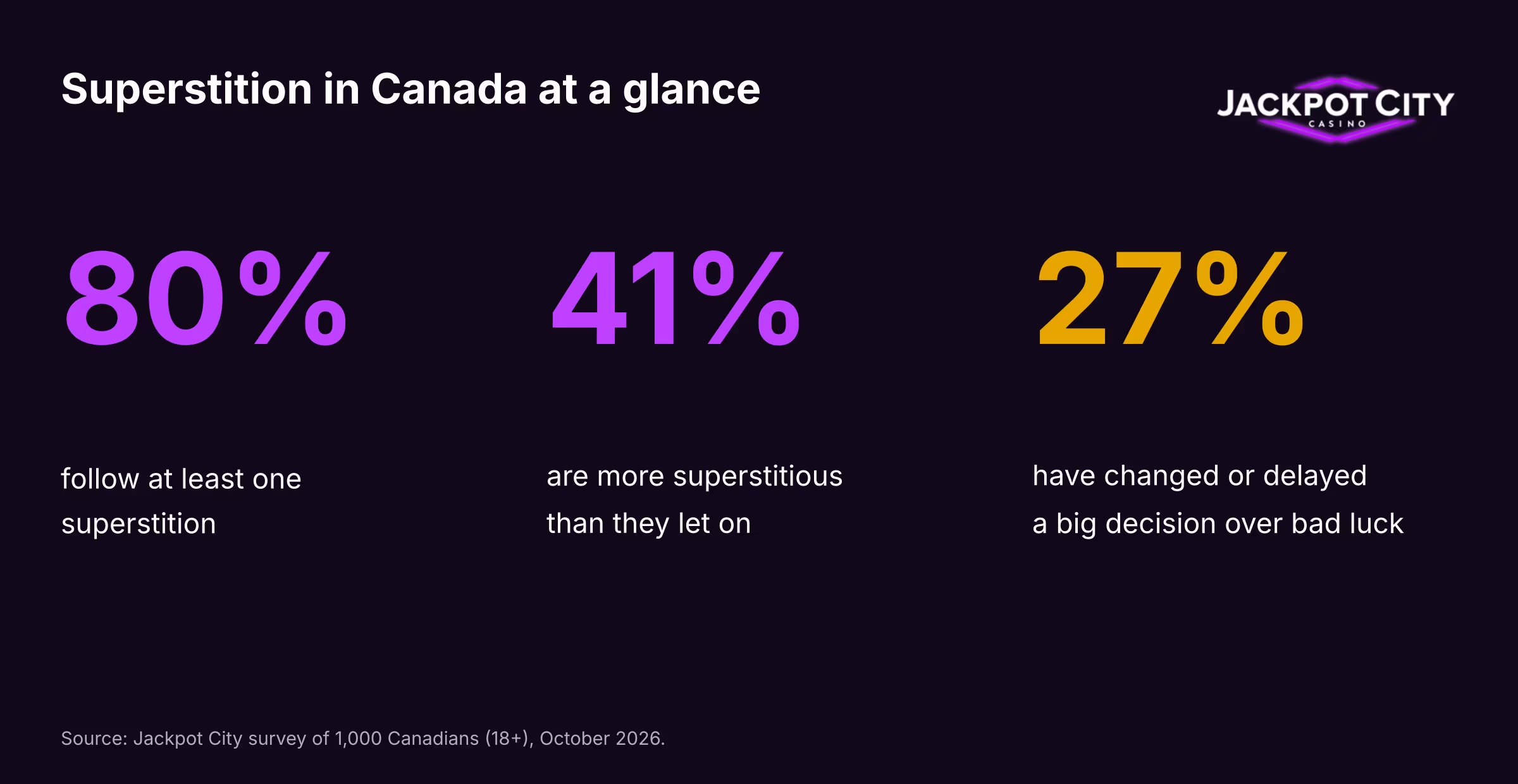
The answer? Far more than most people would ever admit at that dinner party. 8 in 10 Canadians follow at least one superstition, 41% say they're more superstitious than they let on, and more than 1 in 4 (27%) have changed or delayed a big life decision, like a flight, a wedding date or buying a home, because of a bad-luck sign or date.
Do Canadians Feel Lucky?
Ask a room full of Canadians how lucky they feel and you'd get a pretty upbeat answer. Half (51%) consider themselves lucky, and almost 1 in 5 (19%) go as far as calling themselves very lucky. Just under a quarter (23%) feel fairly or very unlucky, while the rest sit somewhere in the middle, waiting to see how the day goes.
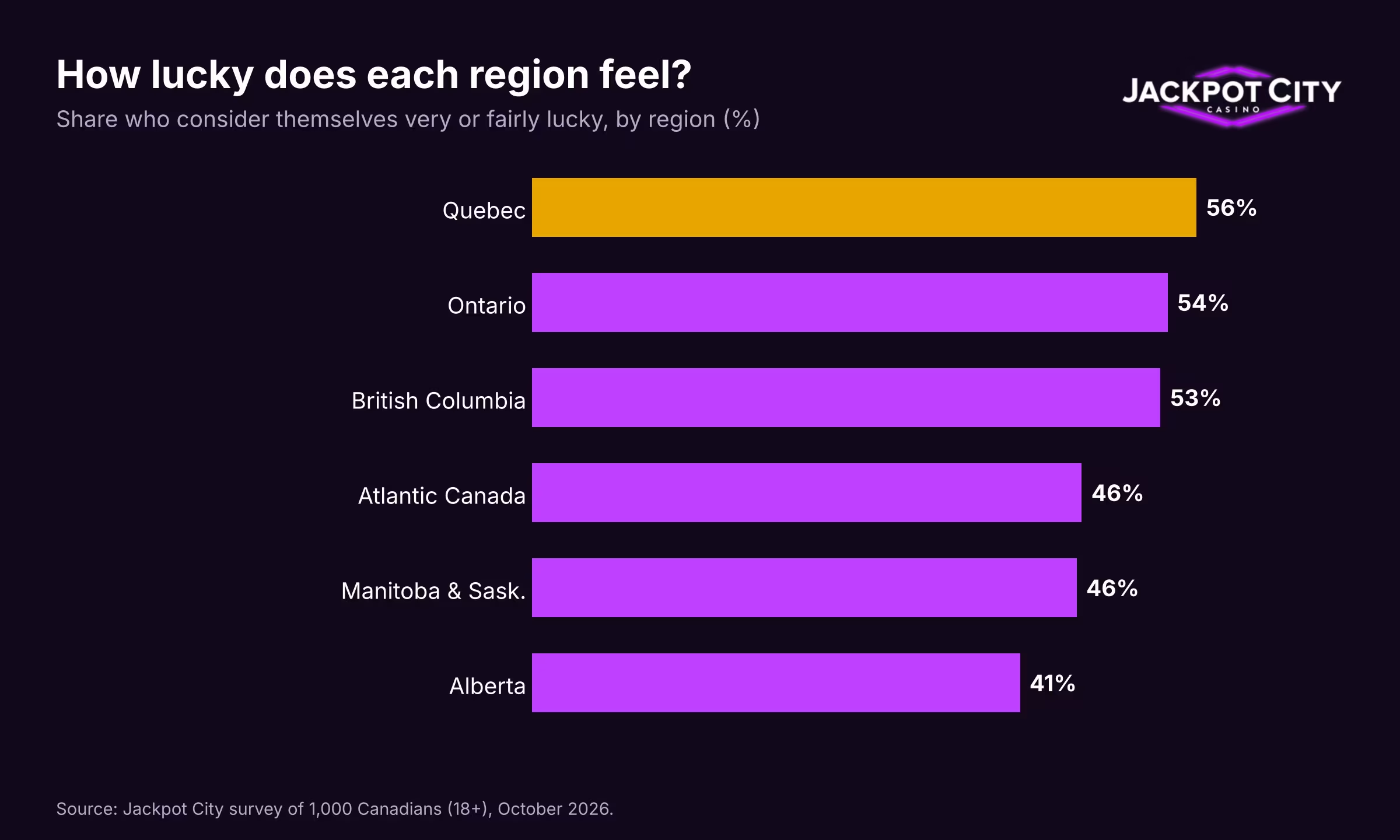
Travel across the country, though, and the mood shifts. In Quebec, 56% feel lucky and more than a quarter (27%) call themselves very lucky. Head west to Alberta and the optimism dips, with only 41% feeling lucky. Manitoba and Saskatchewan have the highest share of people who feel unlucky (29%), compared with just 17% in Quebec.
There's also a chicken-and-egg question hiding in the data. People who actively try to attract luck feel luckier: around 6 in 10 Canadians who rely on manifesting, horoscopes or a lucky colour see themselves as lucky, compared with 39% of those who don't use any luck ritual at all. Whether the ritual brings the luck or the luck inspires the ritual, we'll leave for you to decide.
Canada's Favourite Superstitions
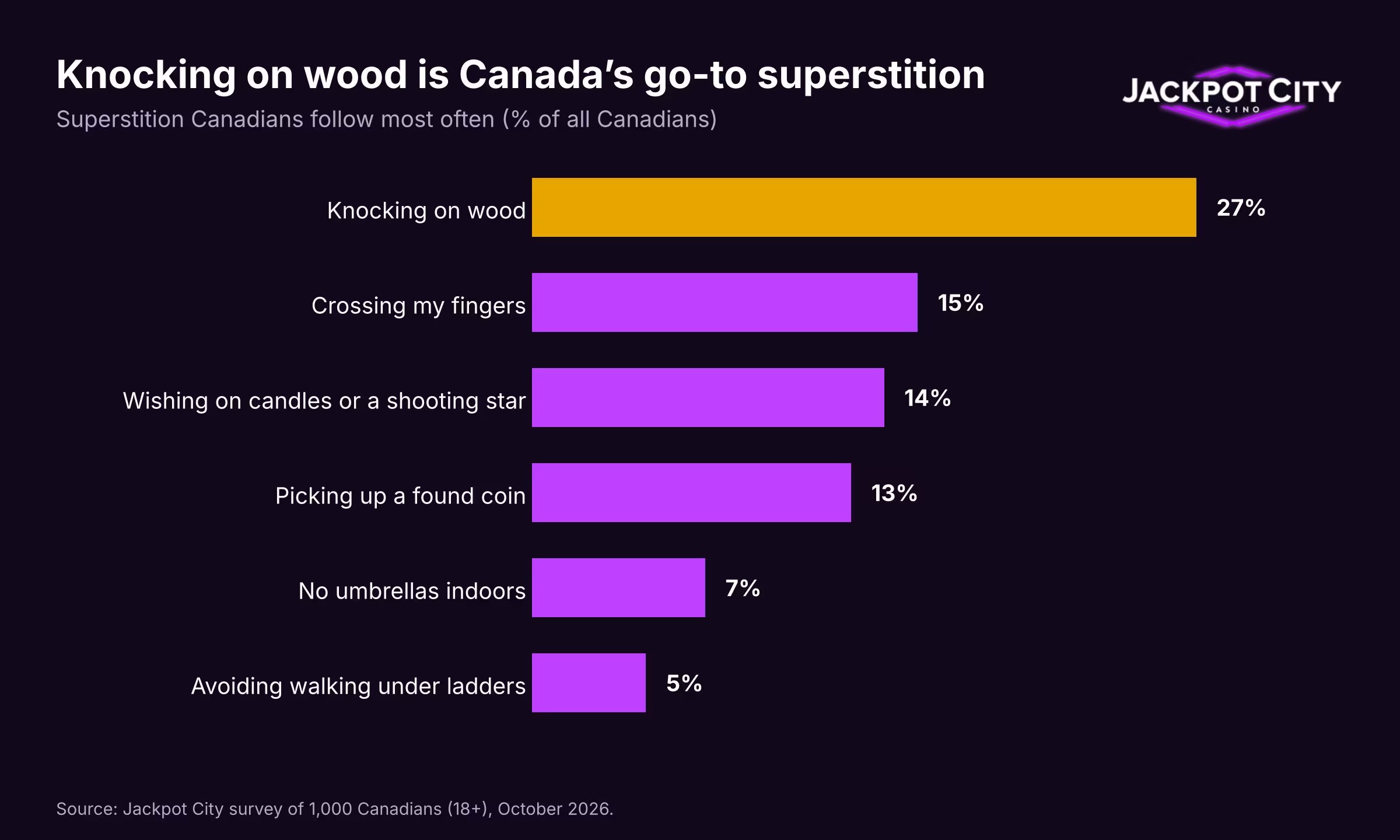
Think about the last time you said something hopeful out loud, like "this interview is going to go well". Did your hand drift towards the nearest piece of wood? You're in good company. Knocking on wood is the superstition Canadians follow most often (27%), well ahead of crossing fingers (15%), wishing on birthday candles or a shooting star (14%) and picking up a coin they find (13%). Fewer people steer clear of umbrellas indoors (7%) or ladders (5%), and only 1 in 5 Canadians (20%) say they don't follow any superstitions at all.
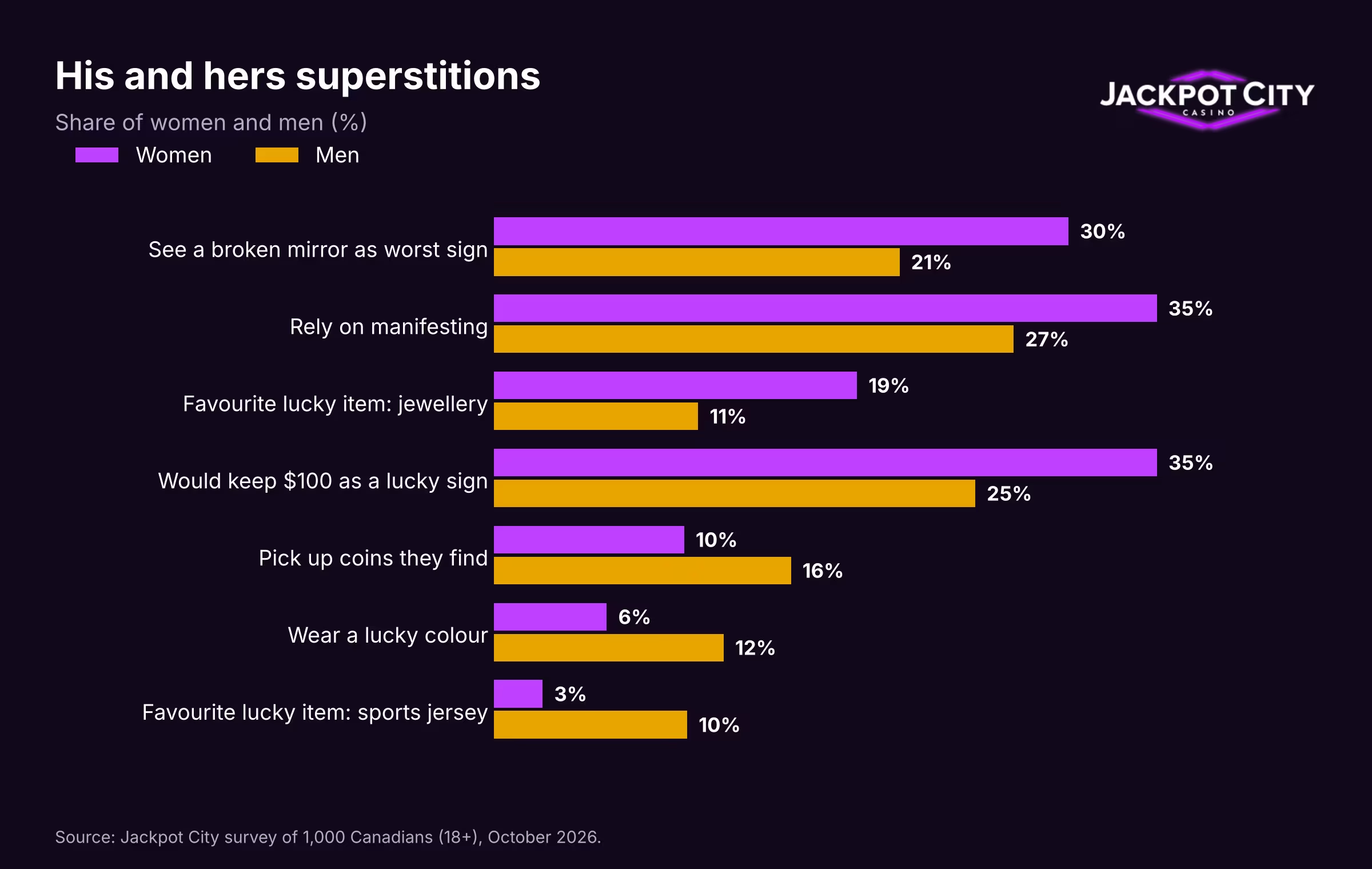
Nowhere is that knock louder than on the East Coast. Atlantic Canada is the country's knocking-on-wood capital, with 36% saying it's their go-to, and only 13% of Atlantic Canadians follow no superstitions whatsoever. The habits also split along gender lines: women are more likely to close their eyes and make a wish (17% vs 11% of men), while men are more likely to bend down and pocket a lucky coin (16% vs 10%).
The Biggest Signs Of Bad Luck
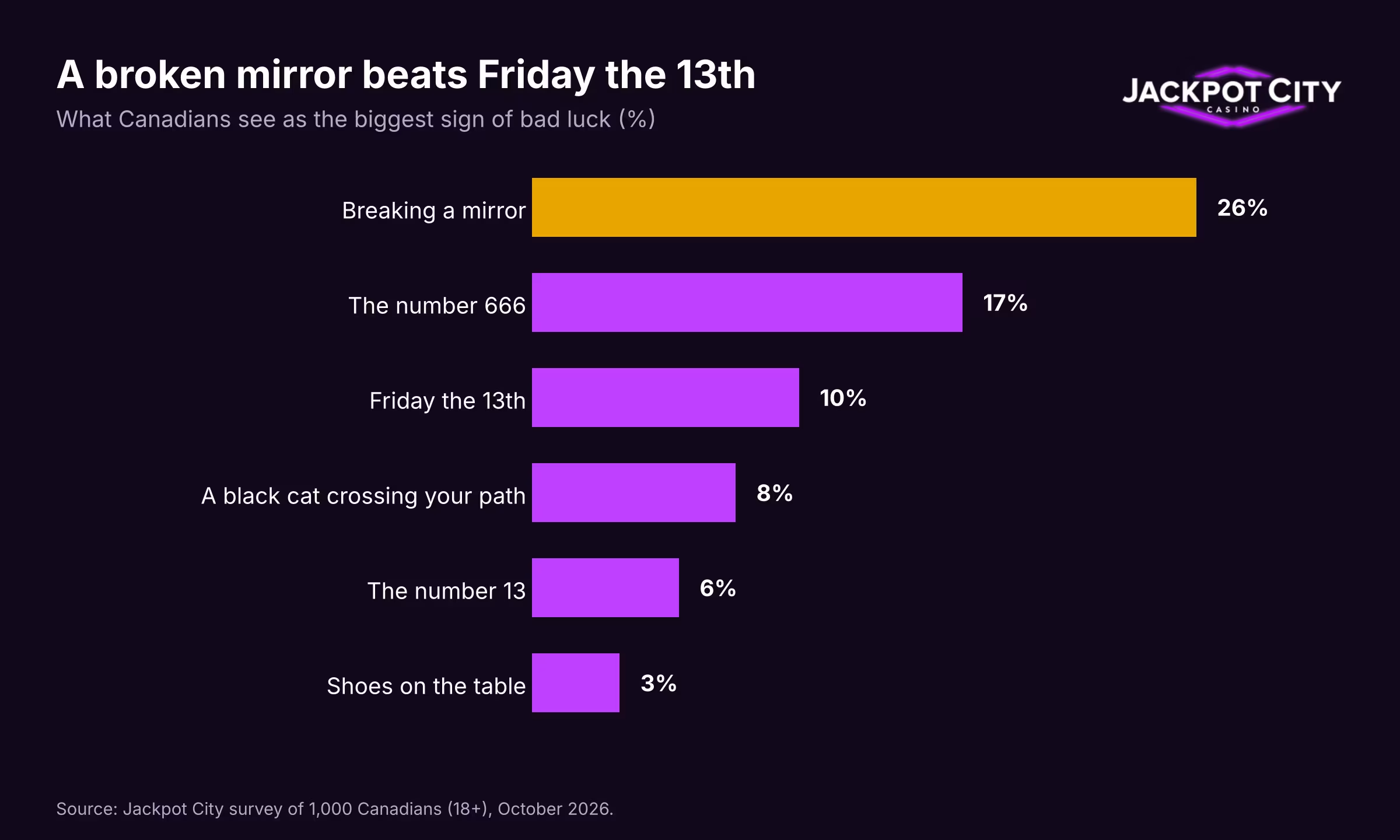
Every time Friday the 13th rolls around, social media fills up with black cats and spooky warnings. But ask Canadians what really worries them and it isn't the date on the calendar. A broken mirror tops the list as the biggest sign of bad luck (26%), followed by the number 666 (17%). Friday the 13th comes third with 10%, ahead of a black cat crossing your path (8%), the number 13 (6%) and shoes on the table (3%).
So if you drop a mirror, expect a few gasps. Women are especially wary of that sound of breaking glass (30% vs 21% of men), and British Columbians are nearly twice as likely as the average Canadian to freeze when a black cat wanders across the sidewalk (14% vs 8%). In total, 7 in 10 Canadians can name a sign of bad luck they take seriously.
Lucky Charms, Loonies And Lucky Socks
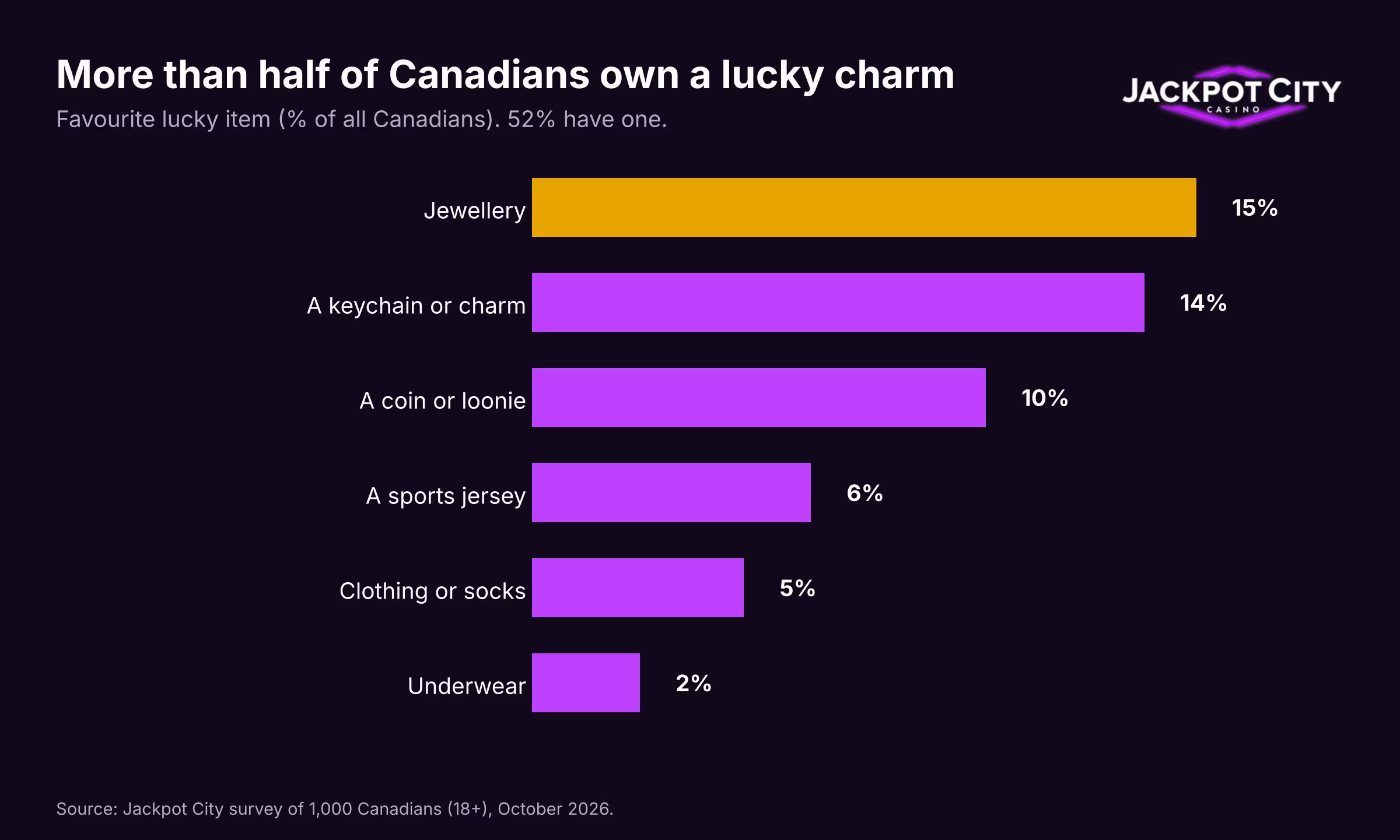
Check the pockets, wrists and keychains of the people around you and there's a good chance you'll find something they'd never leave home without. More than half of Canadians (52%) have a lucky item. Jewellery is the most popular charm (15%), followed by a keychain or charm (14%) and, in true Canadian style, a lucky coin or loonie (10%). Others swear by a sports jersey (6%), a favourite piece of clothing or socks (5%) or even lucky underwear (2%).
The younger the crowd, the more charms you'll spot: almost two thirds (65%) of 18 to 34 year olds own one. What people choose says a lot, too. Women are more likely to reach for a favourite piece of jewellery (19% vs 11% of men), while men are almost four times as likely to put their faith in a sports jersey (10% vs 3%).
Game Day Rituals
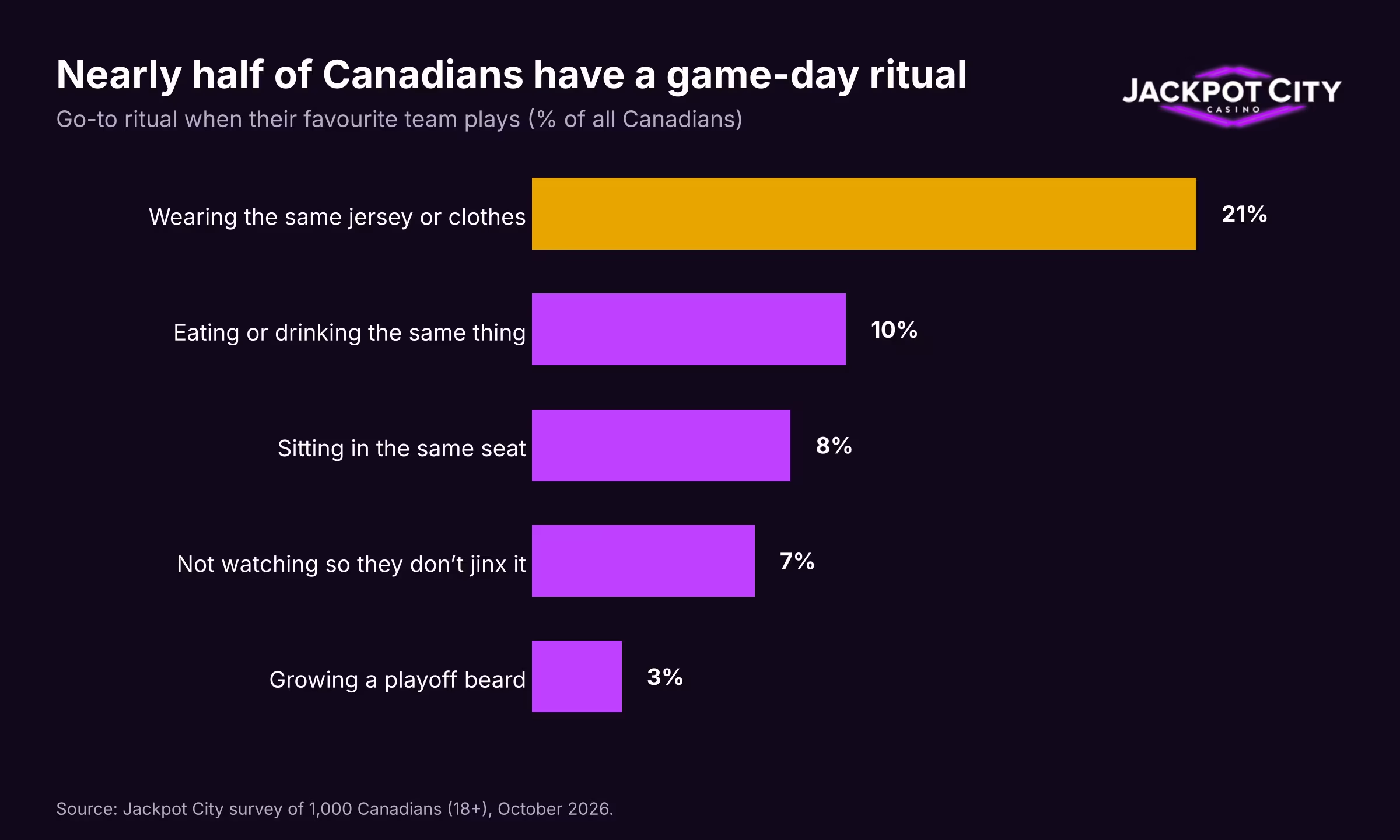
It's the third period, your team is down by one, and you're wearing the exact same jersey you wore for the last win. Coincidence? Not for a lot of Canadians. Nearly half of all Canadians (49%) have a game-day ritual when their favourite team plays. Wearing the same jersey or clothes is by far the most popular (21%), followed by eating or drinking the same thing (10%), sitting in the same seat (8%) and simply refusing to watch so they don't jinx it (7%). And yes, 3% grow a playoff beard. Of the rest, 32% say they don't have a ritual and 19% don't follow sports at all.
Look only at Canadians who follow sports and the share with a ritual rises to 6 in 10 (61%). Men are more likely to have a ritual than women (57% vs 42%), but the real die-hards are younger: 6 in 10 Canadians aged 18 to 34 (61%) have a game-day routine they wouldn't dream of breaking.
When Superstition Gets Serious
Superstition is easy to laugh off when it's about a lucky sock. It's a different story when it decides when you fly, marry or move house. More than 1 in 4 (27%) have changed or delayed a big decision, such as a flight, a wedding date or buying a home, because of a bad-luck sign or date, and 13% have done it more than once. Another 28% admit they've thought about it.
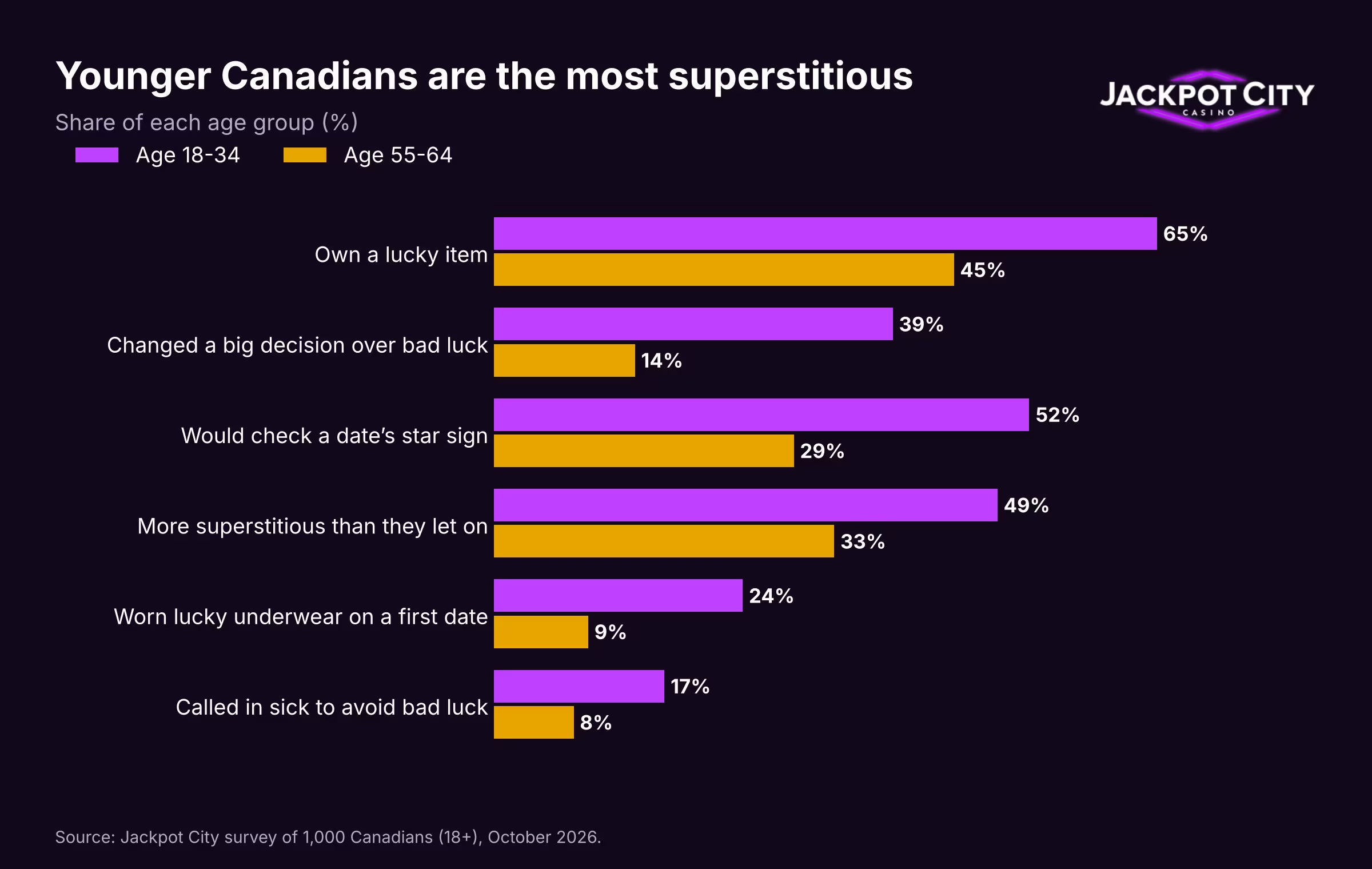
Imagine finding the perfect wedding venue, only to see that the one available date is Friday the 13th. Plenty of younger Canadians would start looking for another day: 39% of 18 to 34 year olds have changed a big decision, compared with 14% of those aged 55 to 64. Parents are also more cautious, with 37% of Canadians with children at home saying they've done it, against 20% of those without.
Superstition even follows Canadians to work, or rather, keeps them away from it. 1 in 8 Canadians (13%) have called in sick to avoid bad luck, for example on Friday the 13th, and another 15% have been tempted. Among 18 to 34 year olds, that rises to 17%.
Manifesting Your Way To Luck
Not long ago, attracting luck meant a rabbit's foot or a four-leaf clover. Today it's more likely to be a morning affirmation or a quick scroll through your horoscope. Nearly 2 in 3 Canadians (64%) rely on something to attract luck, and manifesting or affirmations is the clear favourite (31%). Horoscopes come second (12%), followed by wearing a lucky colour (9%), crystals (4%), vision boards (4%) and tarot (3%).
Women are more likely to manifest (35% vs 27% of men), while men are twice as likely to pull on a lucky colour (12% vs 6%). And the younger generation has fully embraced it: among 18 to 34 year olds, 3 in 4 use some kind of luck ritual, compared with just over half of those aged 55 to 64.
Superstition And Dating
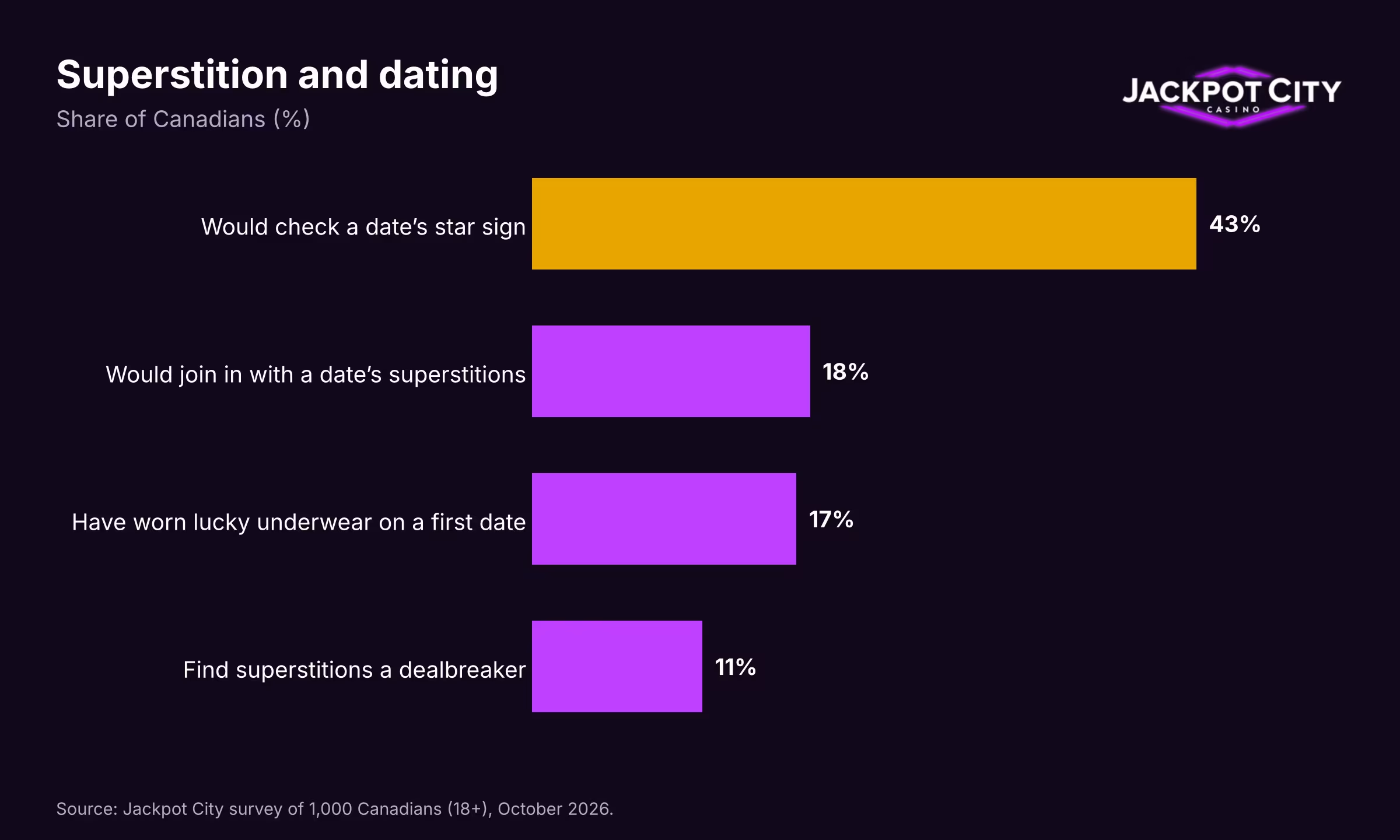
Before the first coffee, before the first text, some Canadians have already checked whether the stars approve. 43% of Canadians would check someone's star sign before dating them, and 7% say it's a must. Women are more likely to take a peek (46% vs 39% of men), and among 18 to 34 year olds, more than half (52%) would check.
Others prepare in a more personal way. 1 in 6 Canadians (17%) have worn lucky underwear on a first date, and more than half of them say it worked.
And what if your date turns out to be the superstitious one? Mostly, Canadians are fine with it. Only 11% call it a dealbreaker, while 39% say it only matters if it affects their plans, such as cancelling on Friday the 13th. A third (32%) would find it cute and 18% would happily join in. In general, Canadians are relaxed about other people's superstitions: 31% see them as harmless fun and 17% as charming, while only 3% call them a red flag.
Secretly Superstitious
Here's a confession many Canadians would only make anonymously. 41% admit they're more superstitious than they let on, including 9% who say they're much more superstitious than people think. Just 20% say they're not superstitious at all.
And there's a twist. Those who hide their superstitions the most are also the toughest on others. Among the 9% who say they're much more superstitious than they let on, 3 in 10 (30%) would see a date's superstitions as a dealbreaker. That's twice the rate among Canadians who say they're not superstitious at all (15%), and ten times the rate among those who are open about their superstitions (3%). It takes one to know one, apparently.
Generation Superstition
Picture a superstitious Canadian and you might imagine a grandparent tossing salt over their shoulder. The data paints a very different picture. Younger Canadians are the most superstitious group on almost every measure. Compared with Canadians aged 55 to 64, 18 to 34 year olds are more likely to own a lucky item (65% vs 45%), check a date's star sign (52% vs 29%), admit they're more superstitious than they let on (49% vs 33%), and wear lucky underwear on a first date (24% vs 9%).
His And Hers Superstitions
Put a couple on the couch on game night and you might see two very different kinds of superstition at work. Women and men are equally superstitious overall, they just do it differently. Women lean towards broken mirrors, manifesting, jewellery and wishes. Men are more likely to pick up a found coin, wear a lucky colour or trust a sports jersey on game day.
The Found Money Test
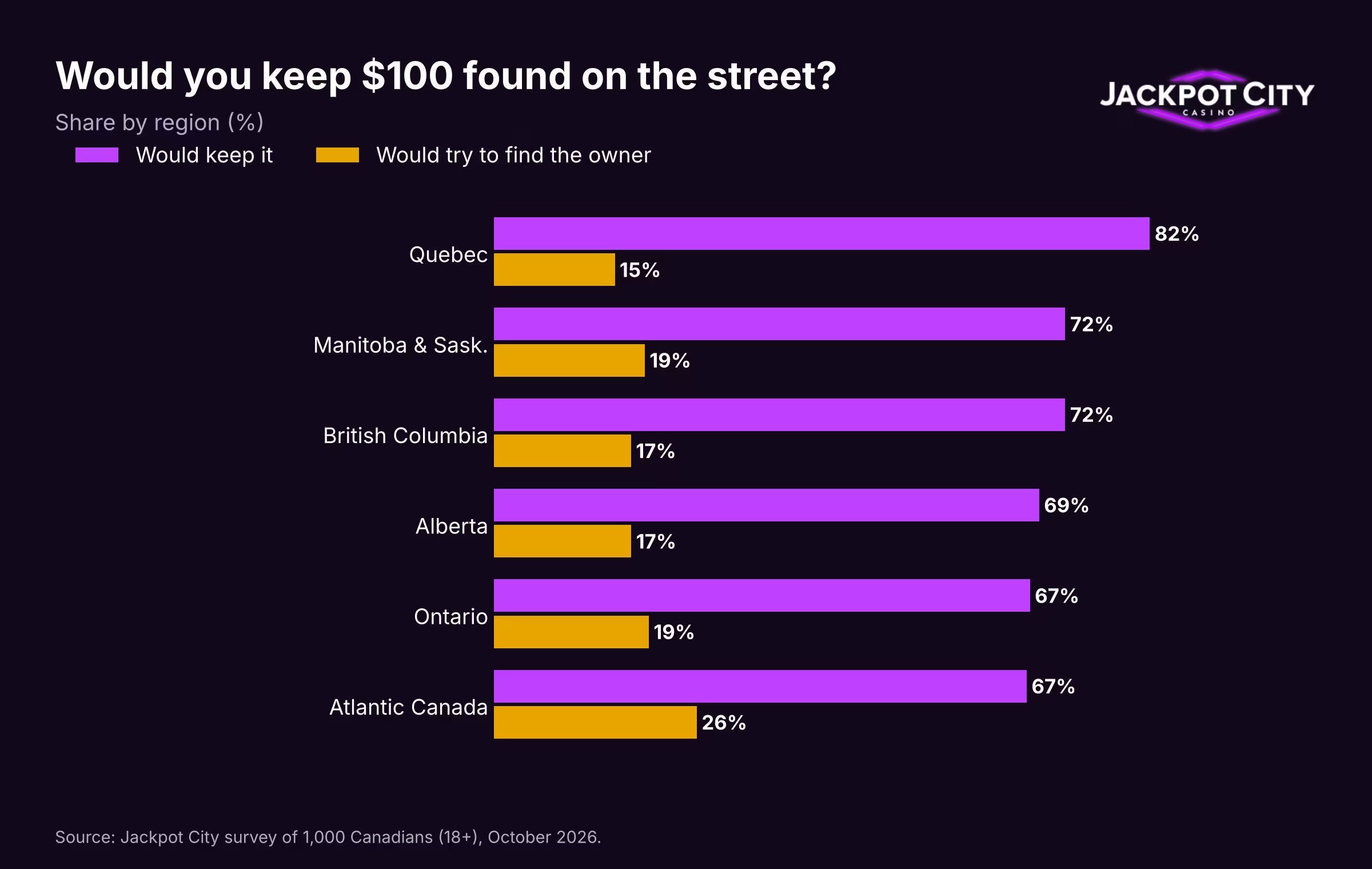
You're walking down the street and there it is: a $100 bill on the sidewalk, with no one else in sight. What would you do? 7 in 10 Canadians (70%) would keep it: 40% say finders keepers, while 30% see it as a clear sign of good luck. Fewer than 1 in 5 (19%) would try to find the owner, 7% would give it to charity and 4% would hand it in to the police or a nearby shop.
Where you live shapes the answer. Quebecers are the most likely to pocket the cash (82%), and 39% of them would take it as a lucky sign. On the East Coast, Atlantic Canadians are the most likely to go looking for the owner (26%). Women are more likely than men to see found money as a lucky sign (35% vs 25%), while men lean towards a simple finders keepers (44% vs 36%).
If You Could Only Be Lucky In One Area
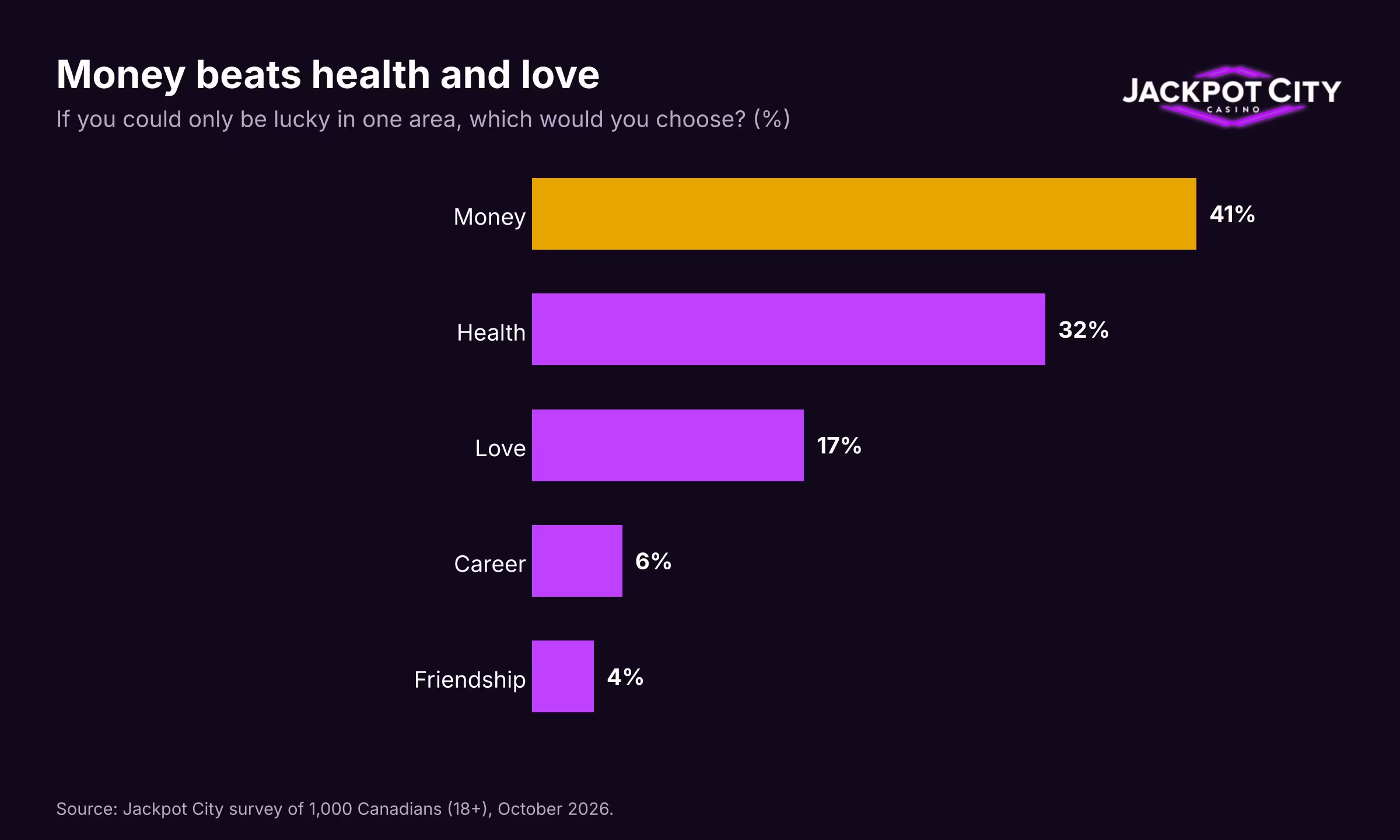
If a genie offered you luck in just one part of your life, what would you pick? Canadians put money first (41%), ahead of health (32%) and love (17%). Career (6%) and friendship (4%) trail far behind.
The answer changes as life goes on. Canadians aged 55 to 64 choose health over money (48% vs 34%), while younger adults are the most likely to wish for luck in their career. People who feel unlucky are also far more likely to choose money (around half) than those who already feel very lucky (33%). Perhaps once luck is already on your side, you start wishing for different things.
About The Study
Jackpot City surveyed a representative sample of 1,000 adults aged 18 and over across Canada on 30 October 2026, using the online research platform Pollfish. Results are representative of the Canadian population. Ontario, Quebec, British Columbia and Alberta are reported as individual provinces. Because fewer people took part in the smaller provinces, some were grouped into regions to keep the results reliable: Manitoba and Saskatchewan are reported together as "Manitoba & Saskatchewan", and Nova Scotia, New Brunswick, Newfoundland and Labrador and Prince Edward Island are reported together as "Atlantic Canada". Respondents from the territories are included in the national figures only, as there were too few to report on separately.