



The Ultimate F1 Attractiveness & Social Media Report
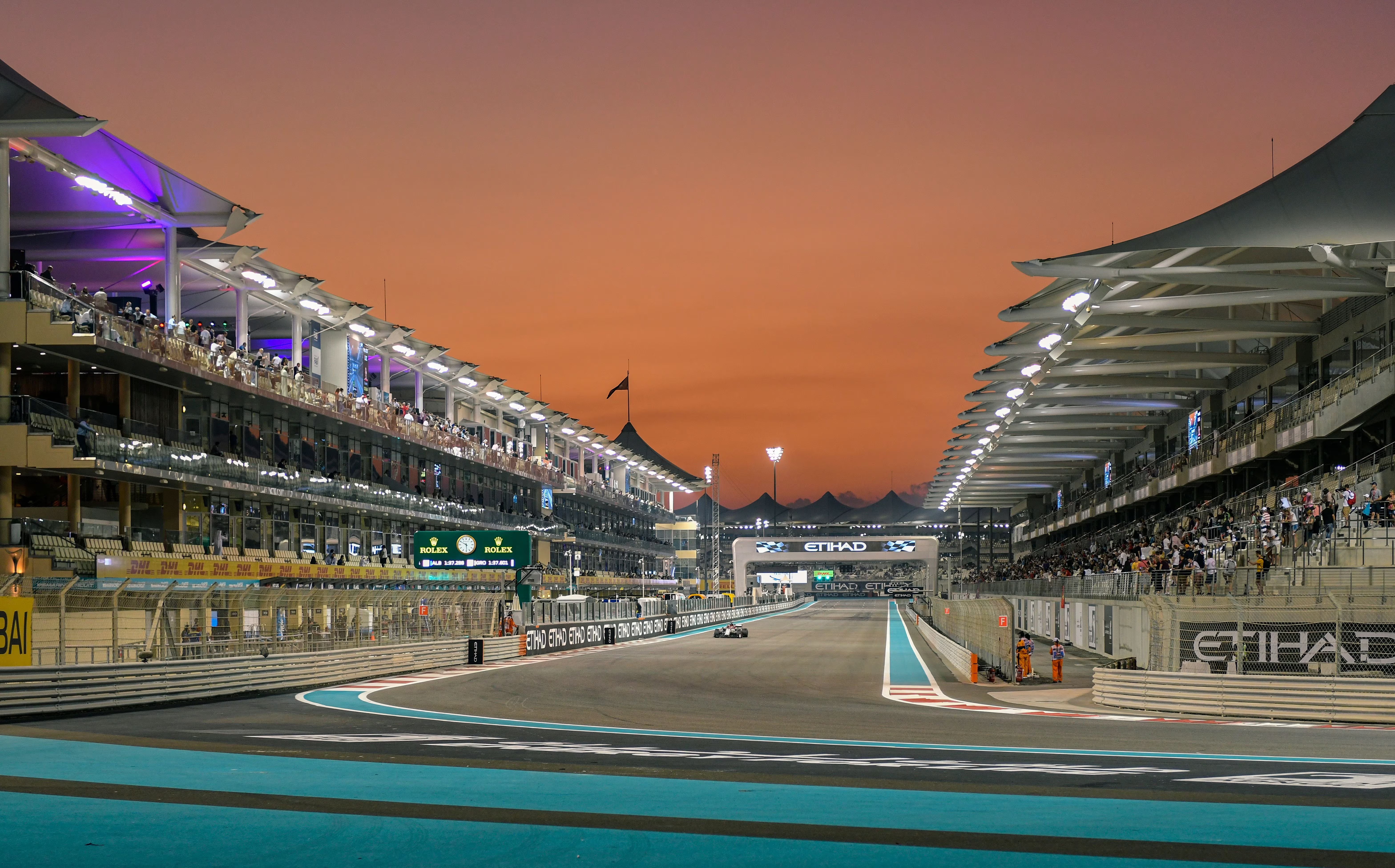
Formula 1 is a high-speed world driven by engineering precision, split-second decisions, and immense athletic talent. But beyond the helmets, carbon-fiber chassis, and strategic pit stops lies another arena where drivers and team bosses compete daily: global appeal, brand value, and social media stardom.
Using advanced facial recognition AI analysis alongside real-time social media metrics, we examined the entire paddock to answer three compelling questions: Does AI beauty match online fan popularity? Who truly reigns supreme on the pit wall? And which F1 team rules the digital landscape?
Drivers Ranking: Do Good Looks Equal Online Fame?
When analyzing the grid through AI facial symmetry, skin smoothness, facial proportions, and overall aesthetic scoring, the results reveal a fascinating divide between pure facial attractiveness and true online star power.
At the very top of the grid, Charles Leclerc stands out as the ultimate complete package. The Ferrari star scored a top-tier 86 Attractiveness Score from the AI algorithms, accumulating 586 total points to share the top spot in pure aesthetic metrics. At the same time, Leclerc boasts a staggering 34.7 million social media followers across all major platforms. Close behind him in raw AI beauty points is Mercedes driver George Russell, who matched Leclerc’s 86 Attractiveness Score and 586 overall AI points while commanding a solid digital audience of 12.8 million followers.
However, the data proves that high AI attractiveness scores do not automatically guarantee the largest online fanbases. Seven-time World Champion Lewis Hamilton scored 575 AI points, placing him slightly behind Leclerc and Russell in pure facial symmetry, yet he completely dominates the global popularity rankings with an unprecedented 66.2 million total followers, nearly double any other driver in motorsport. Similarly, four-time World Champion Max Verstappen scored 566 AI points (an 84 Attractiveness Score), but his on-track dominance commands the third-largest online following at 26.3 million fans.
Meanwhile, emerging talents like Oscar Piastri (580 AI points, 9.9M followers), Kimi Antonelli (577 AI points, 9.1M followers), and Isack Hadjar (576 AI points, 2.0M followers) achieved remarkably high facial recognition scores. Their aesthetic ratings surpass several established veterans, proving that while AI favors ideal geometric proportions, motorsport fans ultimately reward track championships, charisma, and long-standing racing legacies.
Zooming In On Team Principals: Beauty and Brains at the Pit Wall
Formula 1 team principals and executive directors are the strategic masterminds tasked with making high-stakes decisions in a fraction of a second. However, running these pit wall leaders through the same facial recognition AI offers a captivating look at aesthetic appeal in executive leadership.
Leading the entire executive lineup, James Vowles of Atlassian Williams F1 Team emerged as the single most attractive team boss in Formula 1. Vowles achieved an impressive 80 Attractiveness Score and a grid-topping 541 total AI points. Furthermore, the facial recognition technology estimated his age at just 42 years old, knocking five years off his actual age of 47.
Behind Vowles, a competitive group of team leaders formed the upper tier of the aesthetic standings. Ayao Komatsu of TGR Haas F1 took second place among team bosses with a 79 Attractiveness Score and 530 points, while Andrea Stella of McLaren and Graeme Lowdon of Cadillac F1 tied just behind him with 525 points each. Mercedes-AMG PETRONAS Team Principal Toto Wolff rounded out the top five with a 79 Attractiveness Score and 524 AI points, demonstrating that corporate authority and sharp facial symmetry can exist in perfect harmony.
The AI analysis also uncovered intriguing age perceptions and outliers along the pit lane. Executive Advisor Flavio Briatore of BWT Alpine turned heads in the algorithm by scoring 509 total AI points and an Attractiveness Score of 77. Despite being 76 years old, the AI estimated his facial age at 72. On the other end of the spectrum, highly decorated engineering figures such as Frédéric Vasseur of Ferrari (486 AI points) and legendary designer Adrian Newey of Aston Martin (481 AI points) placed lower on the aesthetic index. Ultimately, this underscores a fundamental truth of the sport: when it comes to winning world titles, aerodynamic brilliance and race strategy far outweigh facial symmetry.
The Team Social Media Check: Who Wins the Digital Constructor Championship?
While individual drivers and team principals bring their personal charisma to the paddock, the ultimate measure of brand authority comes down to constructor-level engagement across Instagram, TikTok, YouTube, Facebook, and X.
Aggregating social media follower counts across all platforms reveals that Mercedes-AMG PETRONAS Formula One Team reigns as the digital champion of motorsport, commanding a staggering 44.86 million total followers and achieving a perfect 100 overall popularity score.
The online constructor standings closely mirror track rivalries at the front of the grid. Oracle Red Bull Racing claims second place in digital reach with 42.95 million followers (a 99.4 popularity score), while Scuderia Ferrari HP follows closely in third with 41.74 million followers (99.0 score). McLaren Mastercard F1 Team holds a powerful fourth position with 36.04 million followers and a score of 96.9, demonstrating how their recent resurgence on track has energized a massive online fanbase.
Further down the digital standings, Aston Martin Aramco F1 Team leads the midfield with 12.11 million followers, closely followed by BWT Alpine F1 Team with 11.81 million and Atlassian Williams F1 Team with 11.10 million followers. Visa Cash App RB holds a strong 10.44 million followers, while TGR Haas F1 Team (7.34 million) and Audi Revolut F1 Team (6.58 million) continue to build their global digital footprint. Newer entrants like Cadillac Formula 1 Team have already established a foundation of 5.26 million followers, proving that F1’s digital landscape is expanding at every level.
Methodology
To deliver an accurate analysis of the paddock, Jackpot City evaluated current F1 drivers and key team personnel using standard facial recognition AI software during July and August 2026. The algorithm evaluated facial symmetry, skin smoothness, perceived age, handsomeness, and proportion metrics. Social media follower counts across Instagram, TikTok, YouTube, Facebook, and X were collected concurrently from official driver and constructor accounts to evaluate total online reach.