



A Simple Starter Checklist for Nervous First-Timers

Matt Bourie
Casino Expert


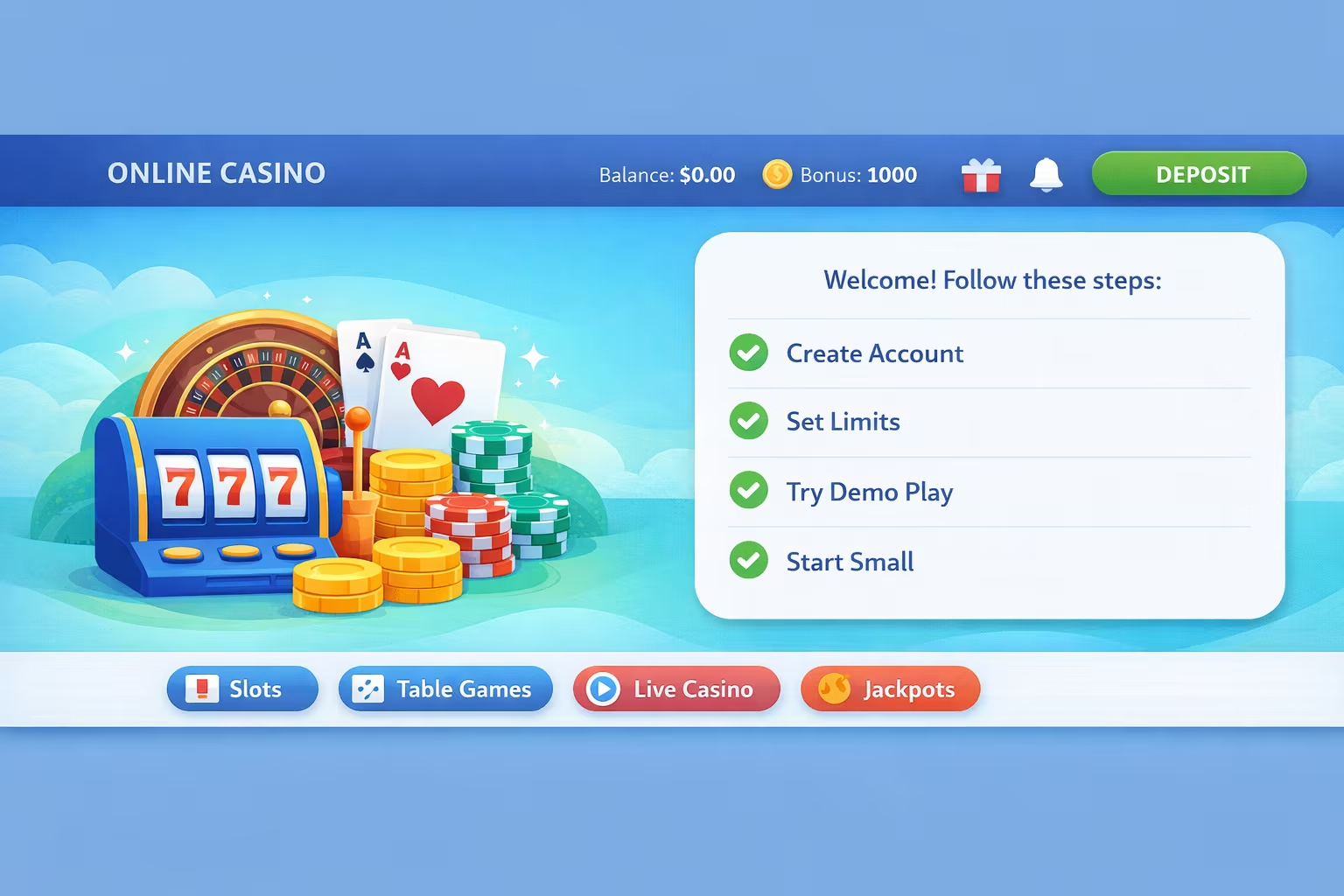
To many people, online casinos can be intimidating and confusing. That’s why I recommend beginning with a calm, structured approach, especially when exploring an online casino platform such as Jackpot City for the first time. Instead of rushing in, I find it far more effective to follow a simple checklist that keeps everything contained, transparent, and enjoyable from the outset.
Why a Checklist Matters
When I speak to first-time players, the most common concern I get is uncertainty. They usually don’t know what to expect, how to stay in control, or how to avoid feeling overwhelmed. A checklist removes ambiguity. It replaces guesswork with deliberate steps, ensuring that each decision is informed and not reactive.
This isn’t about maximizing outcomes or chasing results. It’s about maintaining clarity, awareness, and personal boundaries throughout the experience.
Step 1: Confirm eligibility and environment
Before anything else, I make sure I meet the basic requirements. This includes confirming that I’m accessing the platform from a permitted jurisdiction such as Canada or New Zealand. It’s a simple step, but it establishes a responsible starting point.
I also take a moment to assess my environment. Am I relaxed? Do I have uninterrupted time? Approaching this with a clear head makes a noticeable difference.
Step 2: Create and verify your account
Account creation is straightforward, but I treat it as more than just a formality. I ensure that all details are accurate and up to date. Verification steps, while sometimes overlooked, are essential for maintaining account security and access to features.
From my perspective, this step sets the tone for trust and transparency between the player and the platform.
Step 3: Review key terms and conditions
This is one area I never skip. Taking a few minutes to read the terms and conditions provides clarity on how the platform operates. I find it important to check the withdrawal times and methods, restricted actions, and general policies.
I don’t need to analyze every line in detail, but I make sure I understand the fundamentals. It prevents confusion later and ensures that expectations remain realistic.
Step 4: Explore the interface without pressure
Before launching any game, I like to explore the platform layout. I navigate menus, look at available sections, and familiarize myself with how everything is organized.
Modern platforms often feature polished interfaces, intuitive navigation, and visually engaging design elements. Sites that prioritize user experience can feel easier to navigate. Taking time to absorb the design and layout of the site without pressure helps me feel more comfortable and in control.
Step 5: Set personal boundaries early
This is arguably the most important step in my checklist. I decide in advance how much time and money I am comfortable allocating. Even though platforms provide access to responsible gaming information, I don’t rely on external prompts or system triggers. Instead, I define my own limits upfront and stick to them. For me, this transforms the experience into something intentional rather than impulsive.
Step 6: Understand available information resources
Every game and platform feature typically includes a help or information section. I’ve made a habit of reviewing these resources briefly. In this case, I’m not looking for a strategy or ways to improve outcomes. Instead, I just try to get a general understanding of how things function. This keeps the experience grounded in awareness rather than assumption.
Step 7: Start small and observe
When I start playing, I keep things minimal. In this step, I’m mostly observing how the game works. I pay attention to how I feel, how the interface responds, and whether I remain within the boundaries I set earlier. This self-awareness is far more valuable than jumping in too quickly.
Step 8: Monitor behaviour, not outcomes
One of the most useful mindset shifts I’ve adopted is focusing on behaviour instead of results. I ask myself:
-
Am I still comfortable?
-
Am I sticking to my limits?
-
Am I making deliberate choices?
This keeps the experience measured and prevents it from becoming reactive or emotionally driven.
Step 9: Take breaks deliberately
I don’t wait until I feel fatigued to step away. I build breaks into the experience from the beginning. Short pauses help reset focus and maintain perspective. They also reinforce the idea that this is just one hobby among many, not something that should dominate my time.
Step 10: Know when to stop
Ending a session is just as important as starting one. I decide in advance what “done” looks like. This could be a time limit, a set budget, or simply a feeling that I’ve had enough. Stopping at the right moment ensures that the experience remains positive and controlled.
Responsible Engagement as a Mindset
What I’ve learned over time is that responsible engagement isn’t a single action; it’s a mindset that runs through every step. Some platforms may monitor certain behaviours, such as significant changes in deposits or wagering patterns, but these systems are not designed to replace personal awareness. Consistency in behaviour might not trigger any alerts, yet that doesn’t automatically mean everything is fine.
That’s why I rely on my own checklist rather than external signals.
Keeping the Experience Balanced
I approach online gaming as one form of digital entertainment among many. It sits alongside other activities. By keeping it in context, I avoid overemphasis and maintain a healthy balance.
Final Thoughts
For anyone feeling uncertain about starting, I always recommend simplifying the process. A structured checklist removes pressure and replaces it with clarity. From verifying your account to setting limits and recognizing when to stop, each step contributes to a controlled and informed experience. There’s no need to rush, no need to overcomplicate things, and certainly no need to rely on assumptions.
When approached this way, the entire experience becomes far more manageable and far more aligned with personal comfort and responsibility.